Sara Wasserbauer MD

Medical Hair Restoration

To schedule your consultation call 925-939-4763

Posts tagged: dr. wasserbauer

What Are The Best FUE Techniques Currently Being Used?

Question: I’m very interested in having an FUE hair transplant but I’m starting to get confused with all of the different FUE techniques being offered. Do I have a Neograft FUE  (which is extremely expensive), CIT or SAFE?  I also read something about FUE2 . Your website seems to be more straight forward then others and it seems that most FUE is very similar from what I am reading from your organization. I’d like to feel comfortable with my decision to move forward, but this is a big step for me and I keep reading conflicting information on other websites. Can you tell me the best FUE techniques and do you recommend FUE over FUT? Thank you for your time and I look forward to any answer that you can provide. ~Ross
- – - – - – -

Answer: There are no comprehensive studies yet on any of the technologies that you mentioned, the NeoGraft, FUE2, and the SAFE Scribe System. All of these different technologies have their advantages and disadvantages. For instance, the Neograft uses suction to help the doctor get the graft out of the head. The SAFE Scribe has a dull tip instead of a sharp tip, and really no one really knows what the best way is to help a doctor take those individual follicular units out of your donor area out of the back of your head.

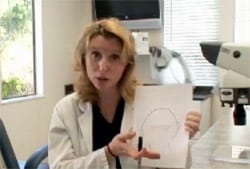
There are a couple things about FUE in general that you should know. View Dr. Wasserbauer’s Full Video Response below:

Posted in Articles | Tagged , , , , , | 1 Comment

Is It Acceptable To Transplant Hair Into Areas of The Scalp That Are Only Thinning?

Do the majority of hair transplant doctors consider it appropriate to transplant hair into thinning areas, e.g., front, mid-section, and/or crown, as opposed to transplanting hair only into bald areas? What are the risks and considerations (e.g., shock loss)? – Robert
– - – - – - – -

Robert,

Thank you for taking the time to write! I am not sure I can speak for the majority of hair transplant surgeons, but through my training and experience with many of the top surgeons out there, the short answer to your question is; it is a judgement call.

The chief concern, as you identified, is whether you will do more harm to the existing hair, than good! If the existing hair is close to complete loss, I believe many surgeons would choose to help that patient by restoring a conservative area of hair/hairline.

If the hair in the area seems to be salvageable, some surgeons would feel more comfortable trying medical therapy alone for 6-12 months, while others would simply exercise caution during the transplant. Too many grafts at once with the latter approach can exacerbate shock loss, especially if the patient has fine or miniaturized hair to begin with.

If you believe you are in this latter category, it is always best to go with the hair surgeon who levels with you about the risk of shock loss; you will be replacing the hair with permanent hair, so you will have a net benefit, but the risk of significant shedding with more limited re-growth does exist.

All of the above refers to hair on the top of the scalp no matter where it is thinning. I’d like to mention, however, that the crown is a unique area with its own set of problems. If the only thinning area you want to fill in is the crown, a patient should seriously consider going on Propecia or deferring surgery entirely until it is clear that the frontal area will not need the grafts more than the back!

The reason is that the grafts are in limited supply, and you want to be able to place them in the most cosmetically beneficial area possible – get the most bang for your grafts! – so to speak. The most cosmetically beneficial area is almost always the front, since it is a natural balding pattern to have some crown loss but still have your face framed conservatively. So, whether there is some hair remaining in the crown area or not, many hair physicians would think twice about treating this area aggressively.

I hope that answers your question! Remember that the best surgeons will not treat any area that still has hair in it without having a long discussion with the patient about expectations and alternative medical treatments first. Good luck and I wish you good hair!

Warm Regards,
Dr. Sara Wasserbauer

Posted in Articles | Tagged , , , , | Leave a comment

Concered About Thinning and Irritation On Hair Transplant Donor Scar

I had a transplant about one year ago to hide a scar from a brow lift. Unfortunately, the scar is still very visible, but what I’m most worried about is the dramatic thinning of my hair along the donor scar line and below it. In fact, right now, I have an irritation, the second one in a month, that is about an inch wide. This one burns and appears infected. My doctor thinks it was just an ingrown hair, but I’ve never had one like this ever! Could I be having thinning hair and irritations because of my hair transplant. Will it stop? Is it likely my hair will ever regrow what I’ve lost since the hair transplant?
-John
– - – - – - – - -

As for your donor area, it does sound like you have local infection and inflammation at the site.  This could have started, as your doctor said, with an ingrown hair and may have spread to the surrounding area.  It could also be what doctors call an “inclusion body” like a stitch that did not dissolve and is instead working it’s way towards the surface.  Again, I cannot tell without examining you, but either way, having your doctor treat the area either with incision and drainage or with antibiotics is a wise idea.  Shock loss can happen in the donor area from the brief interruption in blood supply during the surgery, but it never fails to re-grow.  Your situation is slightly different since your hair has thinned, so it is difficult to predict if you will regain the thickness in that area.  Unfortunately, if it has been a year, your chances of re-growth are lower, but it IS likely to stop.  Rogaine can help grow the hair thicker in that area, and laser treatments (like with a hood laser in a doctor’s office) may also be beneficial.

The important thing is to not give up!  Hair takes time to grow, and I never stop a treatment for lack of effect before I have given it at least a year to work.  Also, if your doctor does a lot of hair transplantation, he or she has likely seen something like this in the past, and I can guarantee they want to help.  Good luck and I hope that helps!

Warm Regards,
Dr. Sara Wasserbauer

Posted in Articles | Tagged , , , , , , | Leave a comment

My Son’s Hair Transplant Has Resulted In a Tightness and Pulling Feeling – Need Advice

My son had a hair transplant done 9 yrs ago and has had a major problem ever since.  He has tightness/pulling over half of his head 24/7 with no relief.  His lifestyle has not been the same ever since.  He cannot work full time as this condition causes much anxiety and stress.  He has seen several doctors and the place that did the transplant tells him they have never heard of this before.

He is pretty much handicapped with this condition and would appreciate any help or advice anyone can give. He is considering a scar revision to see if there is anything that was messed up when they did the surgery. Any advice or help would be greatly appreciated! Thank You!
– - – - – - – - – - -

What a frustrating situation!  I am so sorry to hear of your son’s plight and not at all surprised that the other doctors he has gone to have not encountered his symptoms since this sort of complication is exceedingly rare these days.  Without examining him, it is tough to fully understand what is going on – but let me try to help as best I can;

There are a few scenarios for what might have happened to your son.  He might have had a tight or inelastic scalp to begin with, or the closure on the surgery day might have been tight as well meaning the incision might have been slightly wider than average. Hair physicians can easily measure the elasticity of the donor area (using the Mayer-Pauls elasticity scale) in an office visit and this is something I would suggest initially.  If the scalp is quite tight, a scar revision might not be the best option.  It the scalp is fairly elastic, he would have more surgical options and something else might account for the pulling sensation he is experiencing.  An office visit would also allow a hair surgeon to examine the scar for signs of tension, excessive scarring, or nerve entrapment.  Thick or wide scars can enmesh the nerve and constrict it, causing tenderness or tightness.  Again, these would be rare complications of a hair surgery, but plausible scenarios given what you describe.

I would also suggest scalp stretching exercises as a means of improving the area.  To do the exercises, one needs to clasp the hands at the back of the head against the scalp (like you are leaning back in an office chair after a job well done!) and move the scalp up and down.  Patients should do this several times per day for six months – in other words, they should make it a habit.  When practiced with diligence, I have seen them give good results for several patients and the research done to date, while in small numbers of patients, consistently shows improvement in laxity.

One last possibility is that this pulling and tightness has nothing to do with hair surgery.  I have seen patients (when I was an Internist) who have the persistent sensation of a tight scalp and they are most often referred to a neurologist or anesthesiologist for treatment.  I think it is also important for him to be treated for his anxiety and stress so as not to let this condition ruin his life.  The impact of effective management of these additional issues should not be underestimated.

I sincerely hope this has helped and wish the best for your son.

Warm Regards,
Sara Wasserbauer, MD

Posted in Articles | Tagged , , , | Leave a comment